

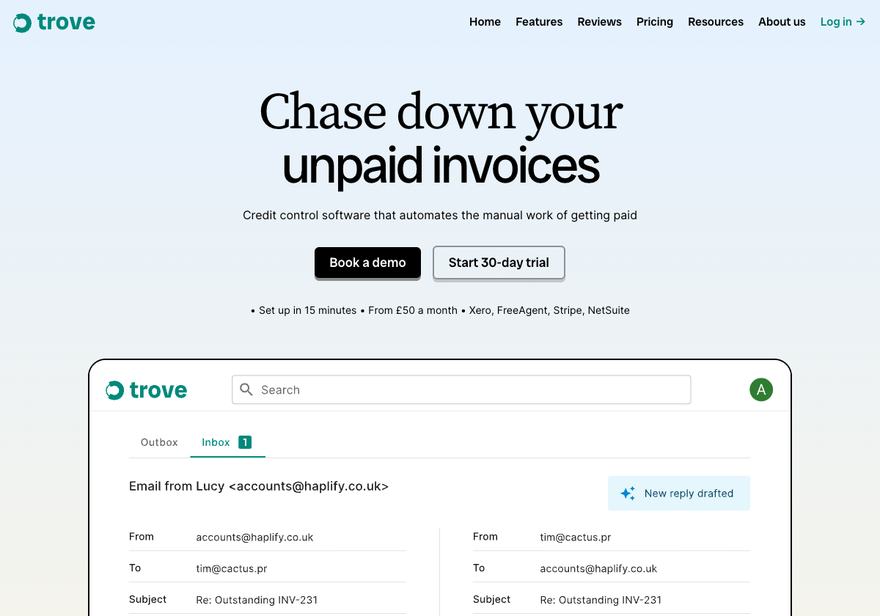
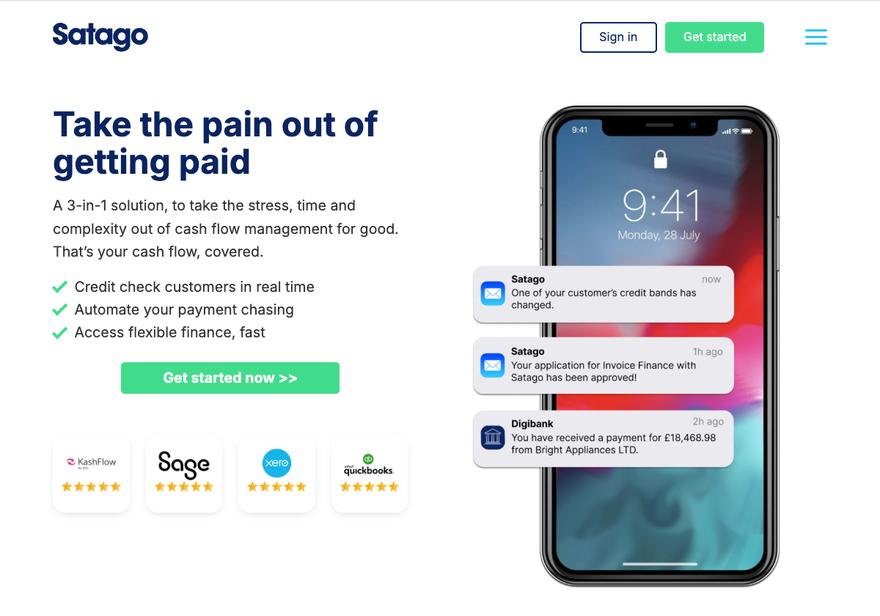
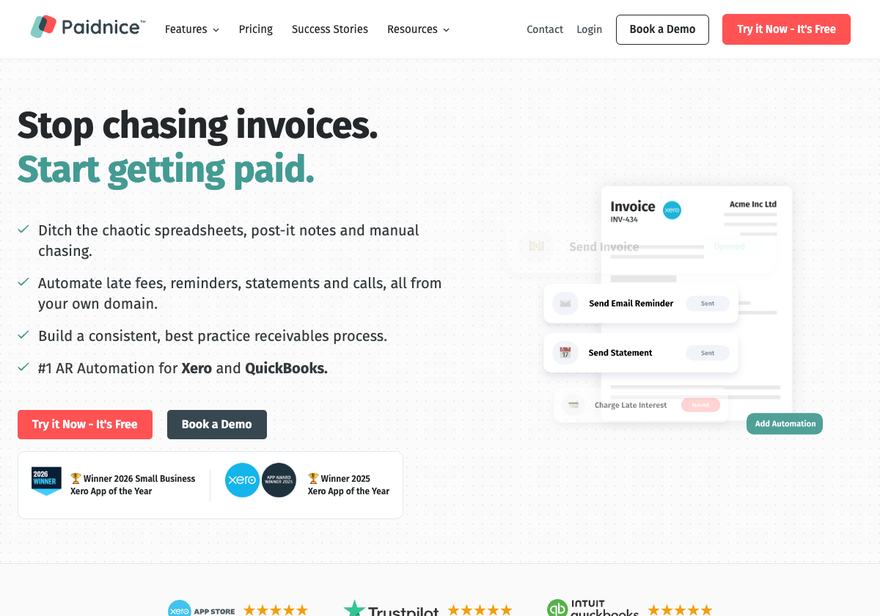
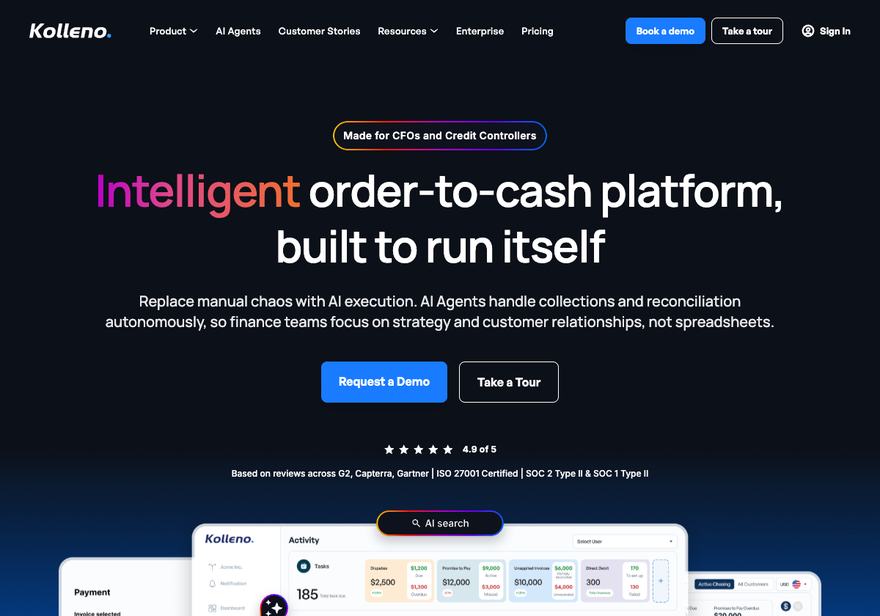
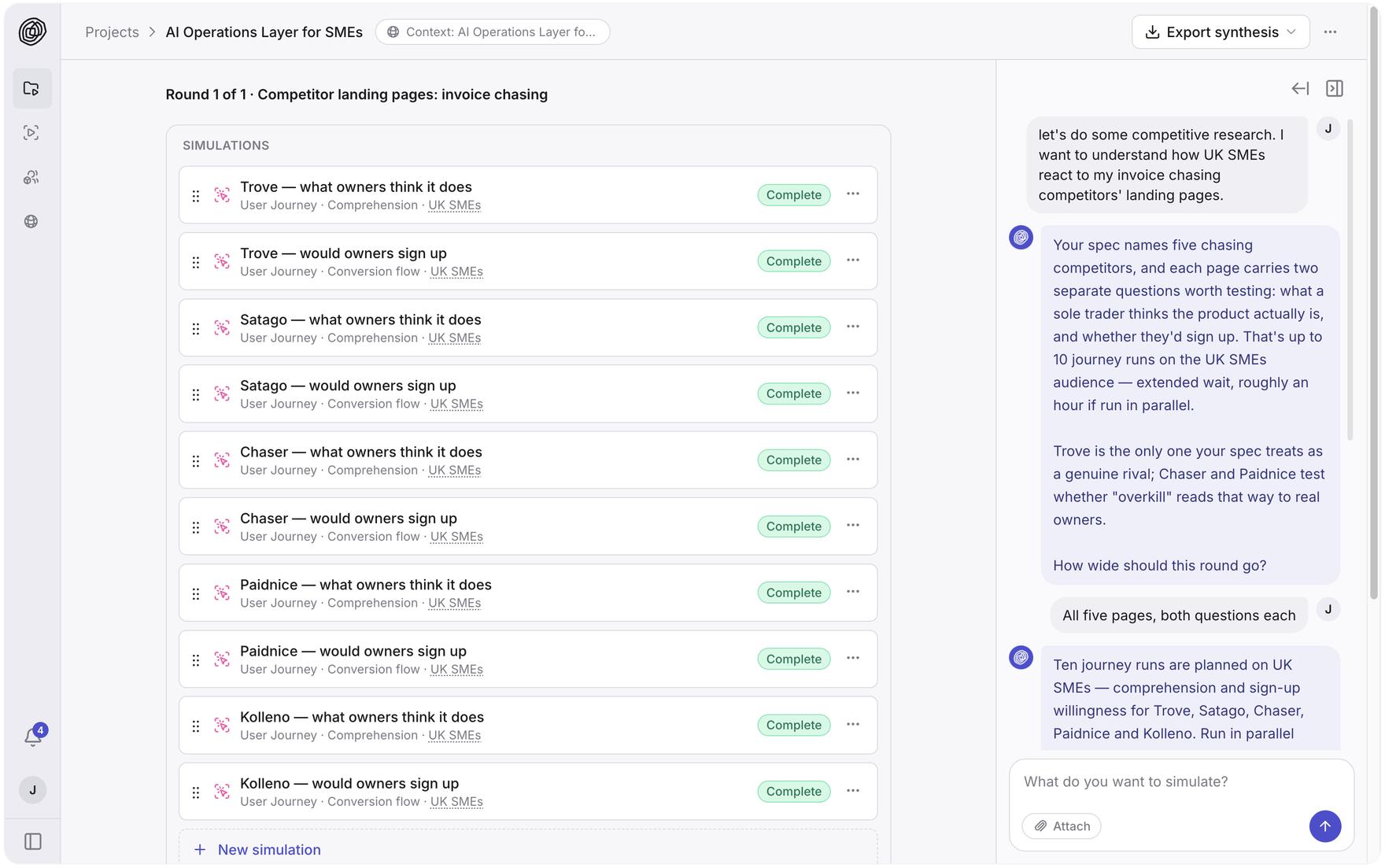
This lesson sends simulated small business owners through the websites of five invoice chasing tools. Ten owners per site, five of them looking at what the product does and five of them trying to sign up. Across 253 minutes of simulated browsing on 124 different pages, all five sites leave the same question unanswered, which is whether the tool will email a client before the owner has seen the message.
What you'd normally do
Open the five websites and write down what they say. That produces a feature comparison and a list of claims, built out of what each company chose to put on its own site. What a customer understands from those pages is not in it. The way to get that part is to recruit people who fit your market and watch them use a competitor's site, which takes a few weeks and a recruitment budget for each site you want covered.
What you bring
The competitor URLs. For this example that is five invoice chasing tools.

This works on any page that is already live:
- A competitor's landing page or pricing page
- A competitor's sign-up flow
- Your own funnel, before and after a change
- A partner's documentation, or a marketplace listing
What comes back
The agent read the five URLs and proposed two user journey simulations for each site, one on what an owner thinks the product is and one on whether they would sign up. Ten simulations, five simulated owners each, against a model of UK SMEs.
A simulated user is given a website and a task. They scroll, click, go back, follow links and type into forms. Every action is recorded with the screen as they saw it.
UK SMEs. A model of
your own users would answer differently.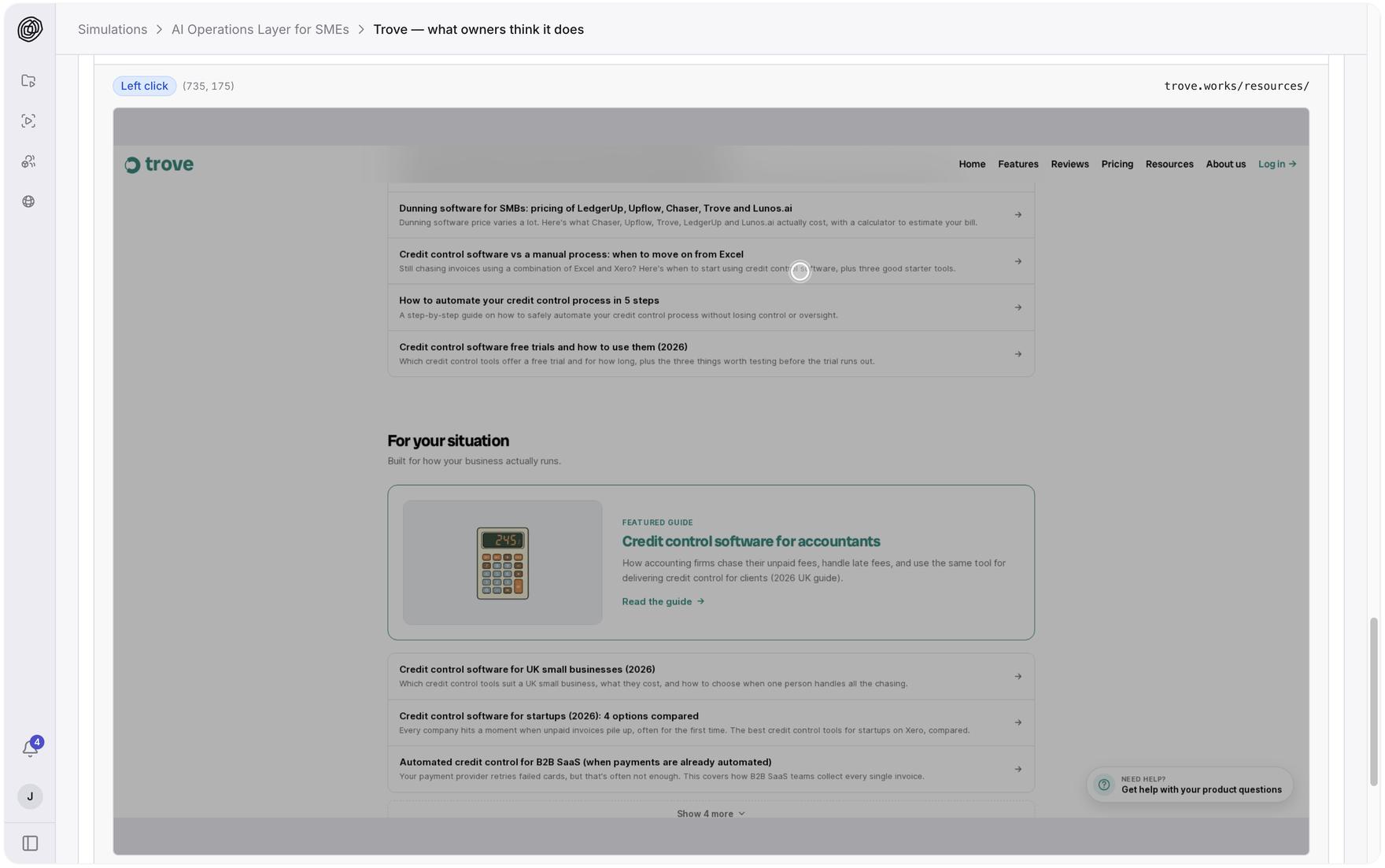
Fifty sessions, and 3,632 browsing actions between them. You already know what these companies claim, because it is written on their homepages. What the sessions add is which of those claims an owner believes, which ones they read as something else, and the point where they give up. Three of those are below.
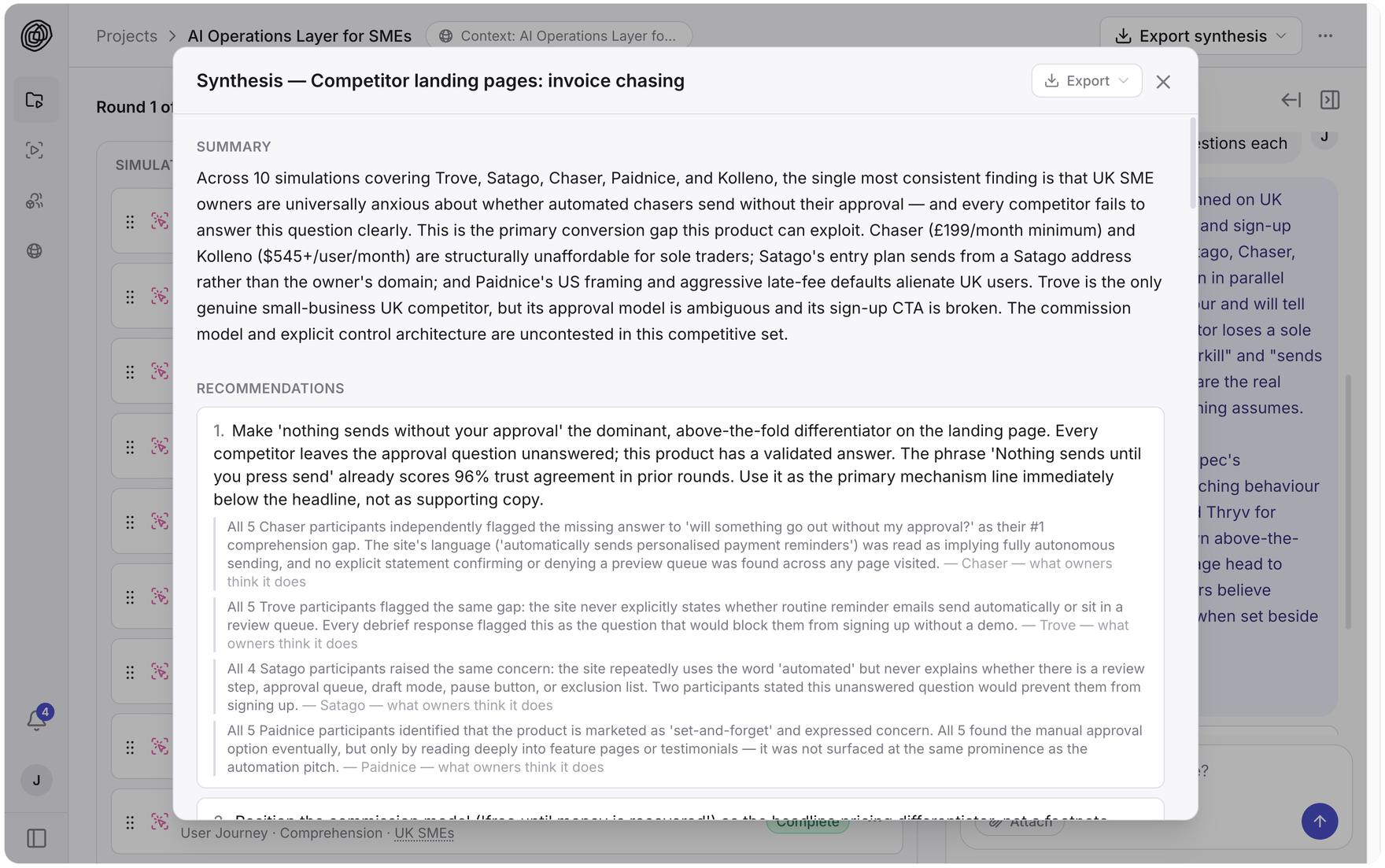
Nobody answers the question every owner arrives with. Owners wanted to know whether the tool would email one of their clients before they had seen the message, and no page on any of the five sites says. On Chaser it was the single biggest comprehension gap across all five sessions, and it came out top on three of the five sites.
Nowhere did I see a straight answer, like nothing is ever sent without your approval.
Simulated owner on Chaser, male, 35 to 44
One badly worded reminder to a good client can cost you the client.
Simulated owner on Chaser, female, 35 to 44
Read the five websites on their own and you would conclude the opposite. Five companies sell invoice chasing, not one of them mentions approval, so it looks like something owners do not ask about. What the sessions show is that owners ask about it before anything else, and then go looking for an answer that is not there.
One step in a sign-up flow can stop conversion on its own. A field that seems
reasonable to the company asking for it can be the thing that ends the session, and
the session ends there without the person ever saying why. On Satago, four of the
five owners reached the form at app.satago.com. All four stopped at the phone
number, which is required, and none of them submitted. Three tried sending the form
empty first to find out whether the field was really mandatory.
I am not giving my direct number to an invoice finance provider before I know whether the trial is even free, so I stopped there.
Simulated owner on Satago, female, 35 to 44
The same thing happened on other sites in the set at different steps, on an email gate in front of a calculator and on a request to connect live accounting data.
Contradictions in messaging cost you confidence. Two pages can each be accurate and still leave someone unable to tell which one applies to them. Most people do not stop to ask which one is right, they get more careful and then they leave. On Chaser, owners found a sign-up page offering a demo environment with sample data, and a Xero integration page describing a four step flow that asks for live Xero credentials. Both may be correct about different onboarding steps. The owners read them together and could not work out which one described the trial they were about to start.
Two pages telling me two different things about what I'm signing up for, and one of them asking for my accounting login, made me slow right down.
Simulated owner on Chaser, male, 35 to 44
Nothing on either Chaser page is false, and the sign-up is lost anyway, because somebody read them in an order the company did not plan for.
UK SMEs.
Everything here is predicted, not measured from these companies' own traffic.The write-up turns the ten simulations into fifteen recommendations, covering what to lead with, which claims to drop, and which fields to cut from our own sign-up form. Every one of them comes from something an owner did or said while reading a competitor's page, so the positioning that comes out of it answers what this audience was actually thinking rather than what five other companies decided to claim.