Find a winning headline without the internal debate
Thirty lines of copy, scored against a model of your users, to find out which part of the product is worth leading with.
This lesson picks the launch headline for an AI tool that chases late invoices for a
small business. Thirty work-in-progress lines of copy go in, scored one at a time
against a model of 400 UK SMEs. The top six sit within four points of each other, so
a second simulation asks what those six make people think the product is, and the line
with the highest click intent is the one that makes 59% expect a debt collection
agency. A third tests that line with different subtexts underneath it. The page goes out with
the winning headline and the subtext that says what the product does.
What you'd normally do
Pick it in a meeting, or run an A/B test after launch. A meeting settles it in an hour
on the opinions of the people in the room. An A/B test needs about three weeks of
traffic, and it only compares the two lines somebody already chose.
What you bring
One description of the product, and thirty lines to test against it. The thirty here
came from Claude, in the same thread the feature had been specified in, so it already
knew what the product was.
The description is the part that matters. It goes in once and stays fixed, so every
line is read against the same product and the round tests the copy rather than the
concept underneath it.
For a round like this you can bring any set of short text where only one of them can
go live:
Headlines for a landing page
Subject lines for a launch email
An app store title and its description
The sentence you use when someone asks what you do
The thirty lines going in, grouped by which part of the product each
one leads with.
What comes back
Every line was shown against the same description of the product, as "a tool that
automatically drafts chasing emails for your overdue invoices", and each respondent
was asked how much the line made them want to learn more. All thirty ran as a single
simulation.
While it was still running, the agent said what the scores were not going to settle:
When they land, the top few will be close, so the natural next step is a smaller round putting just those leaders against each other on clarity and standout.
All thirty ranked by score, with the six that went into the second
simulation marked. Longer lines are shortened here to fit.
Six came back close enough together that the scores could not separate them, so those
six went into a second simulation. That one asked four more things: whether the line
would make someone click, whether it looked like a product for a business like theirs,
whether they believed the claim it made, and what they expected the product to be
before they knew anything about it.
The six leaders scored across every question the second simulation
asked. The two pricing lines were not asked what product people pictured, since the
question was about the claim rather than the category.
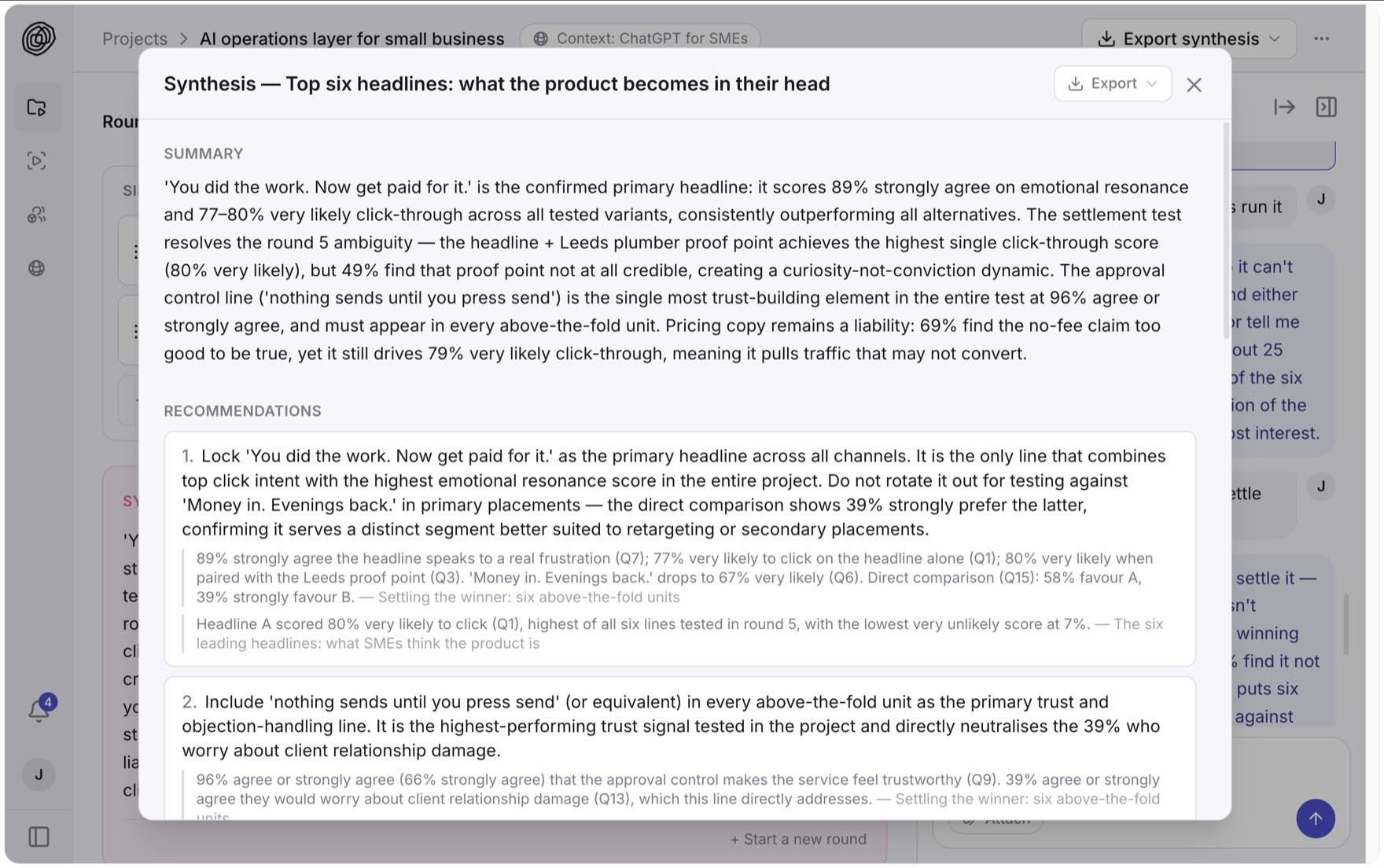
One line is the most appealing, the most clicked, the best fit and the most believed,
but it is also the one people are most likely to take for a debt collection agency, a
lender or a factoring service. That is the only thing left to fix, so the third
simulation stops comparing headlines and starts testing what to put underneath the one
that won.
Each hero and subtext pair, and how many said they would be very likely
to click it. Two further versions reworded the hero line itself and are left out
here.
The two that score highest are a customer story and a price, and neither of them says
what the product is. The line describing the mechanism comes last of the four, five
points behind the top, and it is the only one that answers the question the second
simulation raised.
The synthesis names the winner and says what is wrong with the two lines that beat it on clicks. Run against UK SMEs. A model of your own users would answer differently.
What you changed because of it
You did the work. Now get paid for it. A plumber in Leeds recovered £4,200 of late invoices in 10 days.
You did the work. Now get paid for it. Automated email reminders for every overdue invoice, drafted for your approval. Nothing sends until you press send.
The page goes out with the line that explains the product. The simulation was asked
whether people would click, not whether they would understand what they were clicking,
and five points of click is worth giving up if the clicks it loses come from people looking
for a debt collection agency.
Semilattice Custom is a partnership, not a licence. We build a model of your exact audience from your own research, so the feedback reflects your users, and we meet regularly to help you act on it.